Drive into almost any Texas county seat and the courthouse is the first thing you notice: a domed or towered landmark in the middle of the square, with the cafes, hardware stores and antique shops arranged around it like chairs around a dinner table. It is hard to imagine those towns without them.
Not long ago, though, many of those buildings were in real trouble. Here is how Texas turned that around, and a handful of beautifully restored courthouses worth planning a drive around.
A wake-up call in the 1990s
Texas has 254 counties, and many of their historic courthouses date to the late 1800s and early 1900s. Over the decades, a lot of them were patched, remodeled and squeezed for office space. Grand two-story courtrooms were chopped up with dropped ceilings, original windows and details disappeared, and repairs were put off until they became emergencies.
The turning point came fast. On New Year’s Day 1993, an electrical fire gutted the 1890 Hill County Courthouse in Hillsboro, leaving little more than its limestone walls. Rebuilding took years and millions of dollars. Then in 1998, the National Trust for Historic Preservation put Texas’ historic courthouses on its list of America’s 11 Most Endangered Historic Places. The message was hard to miss: these buildings were not going to save themselves.
The program that changed everything
In 1999, the Texas Legislature created the Texas Historic Courthouse Preservation Program, run by the Texas Historical Commission. As Texas Highways has recounted, the effort grew out of a statewide assessment requested by then-Gov. George W. Bush.
The idea is a partnership. Counties apply for competitive grants, which the Historical Commission says can reach up to $10 million per county, and use them to restore their courthouses to their historic appearance while updating wiring, plumbing, accessibility and safety systems. According to the Historical Commission, the program has awarded more than $500 million in grants and helped 107 historic county courthouses, including full restorations in 89 counties and emergency or planning projects in others.
In 2006 the Historical Commission added a Courthouse Stewardship Program, which trains county staff to care for their buildings after the scaffolding comes down, so a restoration does not slide back into disrepair.
What a restoration actually brings back
Restorations are meticulous. Crews research old photographs and original plans, then put back what time took away: clock towers and cupolas, decorative ironwork, original paint colors and, often, the soaring district courtroom with its balcony. Texas Highways highlighted Wise County’s courthouse in Decatur, where a courtroom that had been cut down to a single floor around 1960 is being returned to its full two-story height.
The result is more than a pretty building. A restored courthouse tends to anchor its downtown again, drawing visitors, festivals and new businesses to the square around it. Even so, the work is far from finished. Texas Highways reported that only about a third of the state’s historic courthouses have been restored so far, and more counties are in line.
Restored courthouses worth a road trip
The Historical Commission keeps a list of restored historic courthouses with their rededication years. Here are some favorites in towns we have written about, so you can plan a whole day around the square:
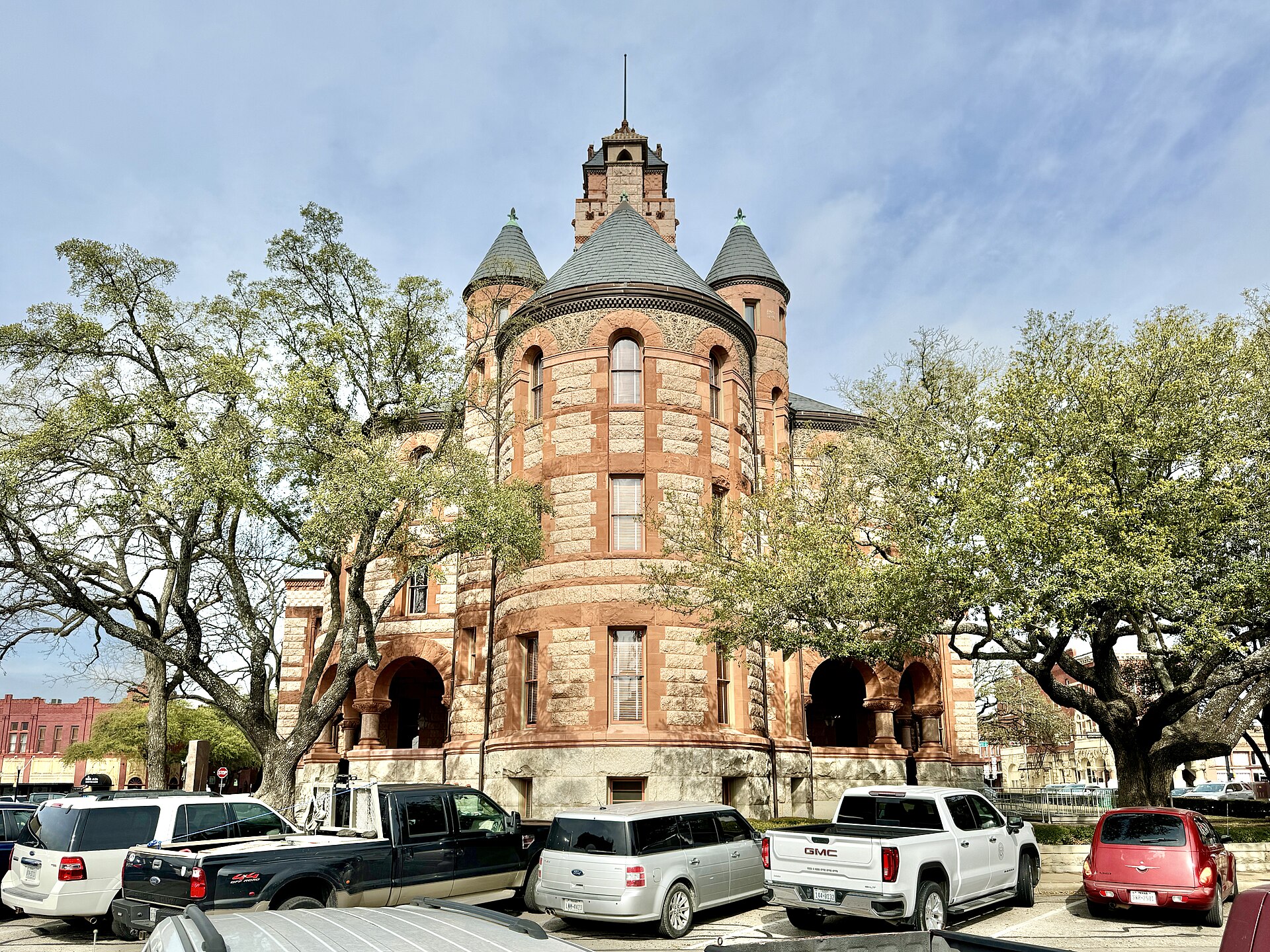
- Ellis County, Waxahachie (rededicated 2003): A red sandstone and granite showpiece crowned with towers. See our Waxahachie guide.
- Shackelford County, Albany (2001): One of the program’s early restorations, on a square paired with the Old Jail Art Center. See our Albany guide.
- Fannin County, Bonham (2022): A recent rededication that brought back the building’s historic look. See our Bonham guide.
- Marion County, Jefferson (2021): The courthouse in East Texas’ old riverport town. See our Jefferson guide.
- Mason County, Mason (2024): Among the most recent rededications on the list. See our Mason guide.
- Cooke County, Gainesville (2011): See our Gainesville guide.
- Colorado County, Columbus (2014): See our Columbus guide.
- Hood County, Granbury (2012): See our Granbury guide.
- Also on the list: Llano (2002), Lampasas (2004), San Saba (2020), Lamar County in Paris (2005), Goliad (2003) and Jeff Davis County in Fort Davis (2003).
Tips for visiting a historic courthouse
Most of these are still working county buildings, not museums. That means they are generally open on weekday business hours, may have security screening at the door, and courtrooms can be closed when court is in session. Some counties offer tours or self-guided brochures, and a few open their courtrooms for special events. A quick call to the county judge’s or county clerk’s office before you go can save you a disappointing trip.
Even when the doors are closed, the outside is the main event. Walk the full square, look up at the towers and stonework, and read the historical markers on the lawn. Then grab lunch at a cafe facing the courthouse, the way Texans have for well over a century.
Good to Know
- The program: Texas Historic Courthouse Preservation Program, created in 1999 and run by the Texas Historical Commission.
- By the numbers: More than $500 million in grants; 107 courthouses helped, with full restorations in 89 counties (per the Historical Commission).
- Find a courthouse: The Historical Commission’s restored courthouses list includes rededication years for each county.
- Visiting: Most are working government buildings, usually open weekdays during business hours. Call the county ahead for interior access.
Hours, dates and prices can change. Check the Texas Historical Commission’s courthouse list before you head out.
Every restored courthouse is a small victory for the town around it. Pick one you have never seen, fill up the tank, and spend a day on the square. That is about as Texas as a road trip gets.
Featured photo: w_lemay via Wikimedia Commons, CC BY-SA 2.0.