Spend any time in Nacogdoches and you’ll keep running into the same phrase: “The Oldest Town in Texas.” It’s the town’s proud nickname, and it shows up on signs and visitor brochures alike. The full story is a little more complicated than a slogan, but it’s a good one, and it gives you a reason to slow down and see a town where Texas history runs deep.
The story behind the “oldest town” claim
Nacogdoches is the seat of Nacogdoches County in deep East Texas, about three hours north of Houston and roughly three hours southeast of Dallas. Long before any European arrived, the area was home to the Caddo people. The town takes its name from the Nacogdoche, a Caddo group whose main village stood here.
Spain built a mission in the area in 1716. In the 1770s Spanish authorities ordered settlers out of East Texas, and in 1779 a Spanish officer, Antonio Gil Y’Barbo, led a group back to the old mission site. That year the settlement was officially recognized as a town. That 1779 founding is what Nacogdoches points to today.
So is it really the oldest?
It depends on how you count. Ysleta, now part of El Paso, traces its settlement to 1680, and San Antonio’s founding dates to 1718, so other Texas communities have their own strong claims. Nacogdoches’ case rests on its long, deep roots in both Caddo and Spanish history and its standing as one of the earliest towns in the state.
The city uses “The Oldest Town in Texas” as its official nickname, and there’s no question it’s one of the oldest. The best way to settle the debate is to visit and decide for yourself.
Start with the brick streets downtown
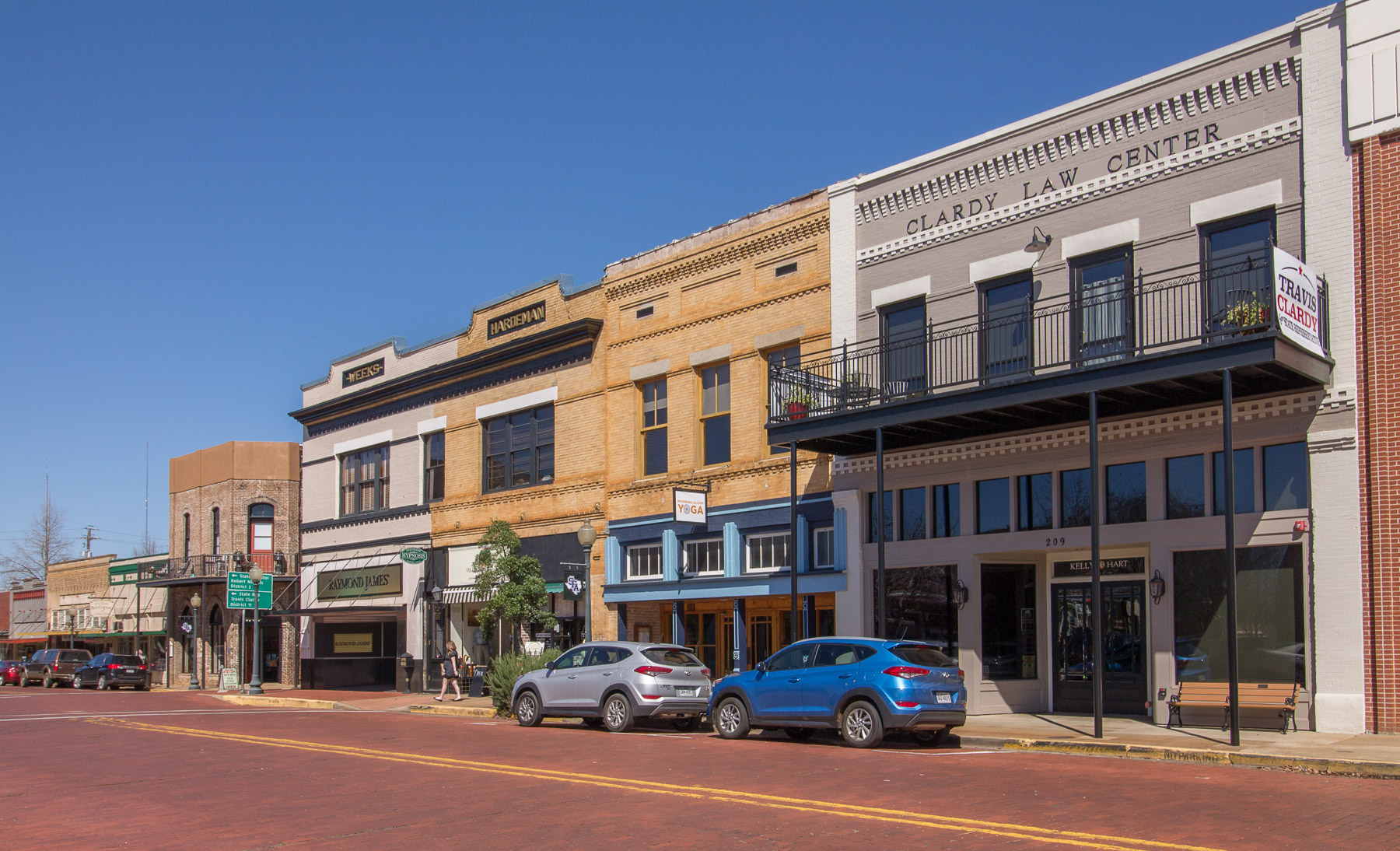
Downtown Nacogdoches centers on its historic square, with red brick streets, local shops and restaurants. The Nacogdoches Convention and Visitors Bureau is right on the square at 200 E. Main St., and it’s a good first stop for maps and current event info.
Nacogdoches has flown under nine flags over its history. That’s why its big holiday celebration is called the Nine Flags Christmas Festival.
Museums and historic homes
The city-run historic homes are free to visit, which makes this a budget-friendly trip.
- Sterne-Hoya House Museum and Library, 211 S. Lanana St. This 1830 dogtrot house was built by Adolphus Sterne, a merchant and leader in the Texas Revolution, and it’s the oldest home in town. Tours are free. Hours listed are Wednesday through Saturday, 10 a.m. to 4 p.m.
- Durst-Taylor Historic House and Gardens, 304 North St. This wood-frame house from around 1835 sits near the old El Camino Real. It’s free, with the same Wednesday-through-Saturday hours.
- The Stone Fort Museum on the Stephen F. Austin State University campus. It’s a 1936 reconstruction of Gil Y’Barbo’s stone house, which over the years served as a trading post, home, jail and more. The museum focuses on early East Texas history. Per SFA’s museum page, it’s open Tuesday through Saturday 10 a.m. to 4 p.m. and Sunday 1 to 5 p.m.
- Oak Grove Cemetery, where four signers of the Texas Declaration of Independence are buried.
For a bigger outing, Millard’s Crossing Historic Village at 6020 North St. brings together a collection of 1800s East Texas buildings, including a chapel, schoolhouse and general store. It’s open Monday through Saturday, 10 a.m. to 4 p.m., with the last tour at 3 p.m. Admission is listed at $15 for adults, $12 for seniors and veterans and $8 for kids 3 to 12. Its Pioneer Harvest Festival is set for Oct. 24, 2026, and an Old Fashioned Christmas evening for Dec. 4, 2026.
The Garden Capital of Texas
Nacogdoches also calls itself the Garden Capital of Texas, and SFA’s gardens back that up. The Ruby M. Mize Azalea Garden on campus covers about 11 acres and is open dawn to dusk. Azaleas peak in spring, roughly mid-March into April, but fall brings camellias and the color of Japanese maples. The SFA Mast Arboretum and the 40-acre Pineywoods Native Plant Center are also on campus.
When to go
Spring azalea season is the classic time to visit. Fall is a close second: the visitors bureau notes foliage usually peaks from late November into early December. And the holidays bring the Nine Flags Christmas Festival downtown, though 2026 dates hadn’t been posted at this writing, so watch the visitors bureau site.
Good to Know
- Where: Nacogdoches, Nacogdoches County. About 3 hours north of Houston and about 3 hours southeast of Dallas.
- Visitor center: 200 E. Main St., on the downtown square.
- Free sites: Sterne-Hoya House and Durst-Taylor House, Wednesday–Saturday, 10 a.m.–4 p.m.
- Stone Fort Museum: On the SFA campus. Closed Mondays.
- Upcoming: Pioneer Harvest Festival at Millard’s Crossing, Oct. 24, 2026.
Hours, dates and prices can change. Check the official website before you head out.
Whether or not you buy every word of the slogan, Nacogdoches earns its place on any list of historic Texas towns. Come for the brick streets and old homes, stay for the gardens, and y’all can make up your own minds about that “oldest town” debate.
Featured photo: Renelibrary via Wikimedia Commons, CC BY-SA 4.0.