Marfa sits way out on the high plains of Presidio County, a small ranching town at around 4,700 feet where the sky seems twice as big as it does back home. On paper it’s just a quiet spot on U.S. 90. In real life it’s one of the most talked-about little towns in America, thanks to a world-famous art collection, a legendary movie history and some lights in the desert nobody has fully explained.
If you’re thinking about making the long drive, here’s how to plan a Marfa trip that’s worth every mile.
Getting to Marfa
Marfa is remote, and that’s part of the charm. It’s roughly 3 hours southeast of El Paso and about 6 hours west of San Antonio, with Alpine only about 26 miles east down U.S. 90. Most folks fly into El Paso or Midland and rent a car, and many pair Marfa with nearby Alpine and Fort Davis to make a long weekend of it.
Gas up when you can, carry water and don’t count on steady cell service between towns. Out here, the distances on the map are real.
The art that put Marfa on the map
Marfa’s art story starts with Donald Judd, the New York artist who moved here in the 1970s and turned a former Army post on the edge of town into a home for large, permanent installations. Today that site is the Chinati Foundation at 1 Cavalry Row, and it’s the main reason art lovers from around the world find their way to Presidio County.
Chinati is open Wednesday through Sunday from 9 a.m. to 5 p.m., with last entry at 4 p.m. Guided tours are the only way to see most of the collection. The South Grounds tour runs about two and a half to three hours, and the North Grounds tour about two hours, and each one covers roughly 2 miles on foot, so wear good shoes and bring a hat. Judd’s 15 big concrete works along the property line can be viewed for free by trail during museum hours.
One heads-up for this season: Chinati began a major restoration of its Artillery Sheds in October 2026. The sheds, home to Judd’s 100 aluminum boxes, are closed to the public, and part of the campus is under construction, so the tour schedule may shift. Tours often sell out, so buy tickets ahead of time.
Downtown, the Judd Foundation at 104 S. Highland Ave. offers guided visits of Judd’s former home and studio compound, called the Block, and his downtown studios. Each tour runs about an hour and 45 minutes, Tuesday through Sunday, and reservations are required. Ballroom Marfa, a nonprofit arts space at 108 E. San Antonio St., rounds out the art scene with rotating exhibits and programs.
Prada Marfa and the drive west
The most photographed “store” in Texas isn’t really a store, and it isn’t really in Marfa. Prada Marfa is a permanent art installation built in 2005 beside U.S. 90 near the tiny community of Valentine, about 35 miles northwest of town. It’s a fun stop if you’re coming from or headed toward El Paso. Pull completely off the highway, watch for traffic, and remember it’s an artwork, not a business, so there’s nothing to buy.
The Marfa Lights
Ask anybody in West Texas about Marfa and they’ll mention the lights. For generations, people have reported glowing orbs that seem to float, split and fade on the horizon southeast of town. Some swear they’re paranormal, others blame car headlights or atmospheric quirks, and the debate is half the fun.
The official Marfa Lights Viewing Area is about 9 miles east of town on U.S. 90, toward Alpine. The lights don’t keep a schedule, so bring a jacket (desert nights get cold fast, even after a warm day), settle in after dark and be patient. Even if the lights don’t show, the stars usually do.
Courthouse, Hotel Paisano and a stroll downtown
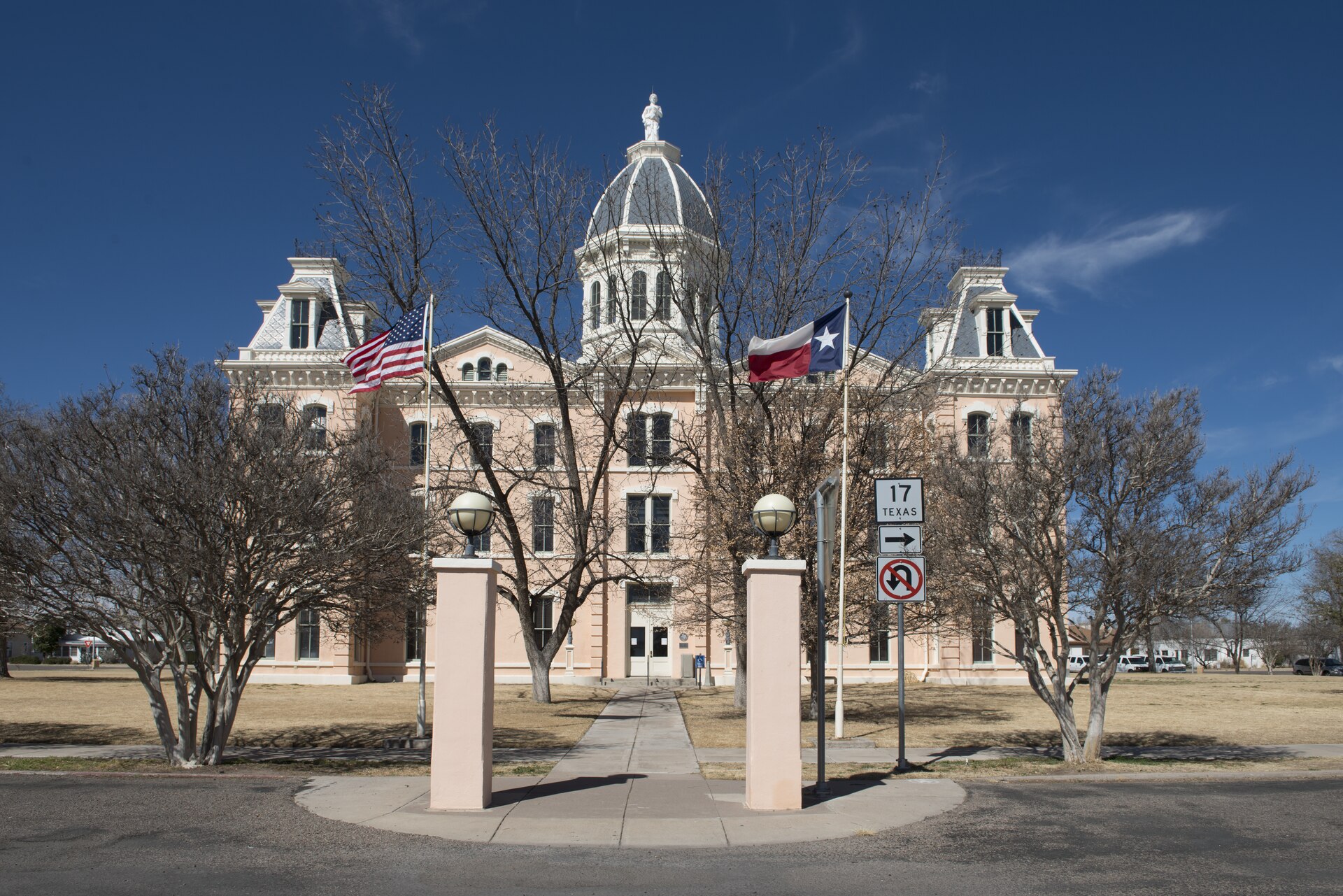
Marfa’s centerpiece is the pink-hued Presidio County Courthouse, completed in 1886, which anchors the north end of Highland Avenue. It’s the classic photo stop in town, especially in late-afternoon light.
A few blocks away is the historic Hotel Paisano, where the cast and crew of the 1956 film “Giant,” including James Dean, Elizabeth Taylor and Rock Hudson, stayed while filming nearby in 1955. The hotel has been going through an ownership change and has announced plans for renovations, so check its website for current status before you plan to stay or dine there.
Downtown Marfa is easy to walk, with galleries, shops and cafes tucked into old adobe and brick buildings. Keep in mind that this is a very small town. Many businesses keep limited hours, and several close early in the week, so a Wednesday-through-Sunday visit lines up best with Chinati and most other spots.
Where to start your visit
Stop by the MARFA Visitor Center at 302 S. Highland Ave. for maps, current hours and local tips. If you’ve got an extra day, Alpine and Fort Davis are both close by and make easy add-ons. We’ve written about Alpine and the Museum of the Big Bend and Fort Davis and the McDonald Observatory if you want to build a bigger West Texas loop.
Good to Know
- Where: Marfa, Presidio County, on U.S. 90; about 3 hours southeast of El Paso and about 6 hours west of San Antonio.
- Chinati Foundation: 1 Cavalry Row; open Wednesday to Sunday, 9 a.m. to 5 p.m., last entry 4 p.m. Guided tours only for most of the collection; buy tickets ahead. Artillery Sheds closed for restoration.
- Judd Foundation: 104 S. Highland Ave.; guided tours Tuesday to Sunday by reservation.
- Marfa Lights Viewing Area: About 9 miles east of town on U.S. 90 toward Alpine. Best after dark; bring a jacket.
- Visitor center: 302 S. Highland Ave., (432) 729-4772.
- Tip: Many Marfa businesses keep short or seasonal hours, so call ahead and avoid planning a Monday-Tuesday trip.
Hours, dates and prices can change. Check the Visit Marfa website before you head out.
Marfa rewards folks who slow down. Give yourself time for a long tour at Chinati, a slow walk downtown and a cold night watching the horizon east of town, and you’ll understand why such a small place has drawn so many people so far.