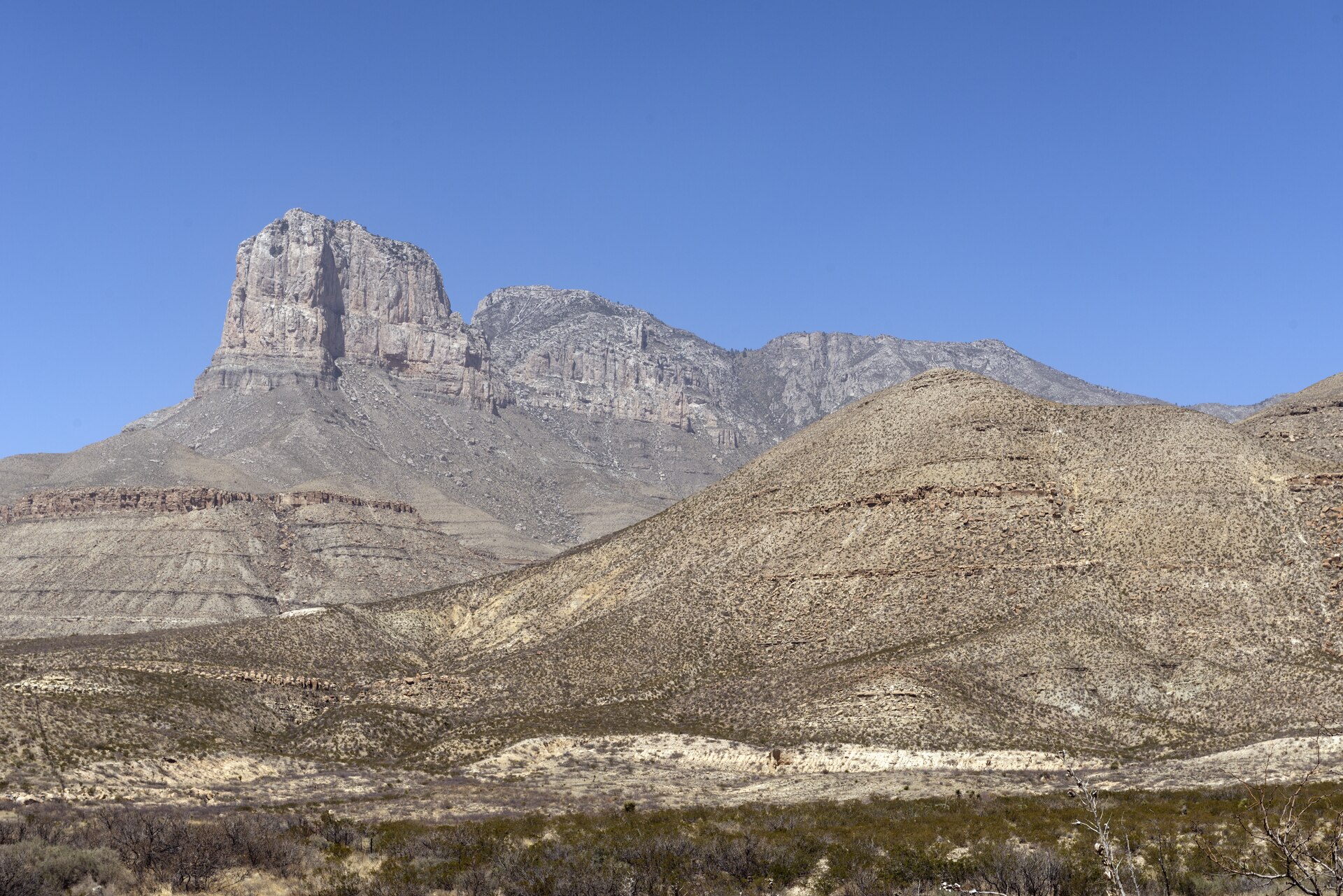
Rising out of the desert east of El Paso, the Guadalupe Mountains look like a ship’s prow sailing across the Chihuahuan Desert. The craggy face of El Capitan is one of the most recognizable sights in West Texas, and right behind it stands Guadalupe Peak, at 8,751 feet the highest point in the state.
Guadalupe Mountains National Park is one of the quieter national parks in the country, and those who make the trip find big hikes, quiet trails and, in McKittrick Canyon, some of the best fall color in Texas.
Getting there
The park sits in Culberson County along U.S. 62/180, near the New Mexico line. It’s about 110 miles east of El Paso (roughly two hours) and about 55 miles southwest of Carlsbad, New Mexico. Carlsbad Caverns National Park is close enough to pair with Guadalupe on the same trip.
Two things catch first-timers off guard. First, the park runs on Mountain Time, and your phone may not switch correctly out here. Second, there’s no lodging or dining inside the park. The nearest towns with services are Carlsbad, New Mexico; Van Horn, Texas; and Dell City, Texas. Arrive with a full tank, plenty of food and more water than you think you’ll need.
Hiking Guadalupe Peak
The trail to the “Top of Texas” starts at the Pine Springs Trailhead near the visitor center. According to the National Park Service, it’s about 8.5 miles round trip with roughly 3,000 feet of elevation gain, and the park rates it very strenuous. Most hikers take six to eight hours.
The trail climbs steadily through desert scrub and switchbacks before reaching pine and fir forest higher up. Near the top, you’ll pass views of El Capitan from above, and the summit is marked by a steel pyramid monument. On a clear day, you can look out over the salt flats to the west and a whole lot of Texas and New Mexico.
A few tips for the peak:
- Start early. You’ll want cool morning temperatures and plenty of daylight.
- Be ready for wind. The upper mountain is known for strong gusts, and conditions can change fast.
- Carry water, snacks, layers and sun protection. There’s no water on the trail.
- Know when to turn around. Weather and fatigue matter more than the summit.
McKittrick Canyon
If Guadalupe Peak is the park’s big climb, McKittrick Canyon is its hidden garden. A spring-fed stream runs through a desert canyon lined with bigtooth maples, oaks and Texas madrones with their smooth red bark. In autumn, the maples turn orange, red and gold, and the colors typically peak from late October into early November, depending on the year’s weather.
From the McKittrick Canyon trailhead, the hike to the historic Pratt Cabin is about 4.8 miles round trip and rated moderate. Hikers can continue past the cabin to the Grotto and the nearby Hunter Line Cabin, for a round trip of about 6.8 miles. The canyon is a day-use area, and the entrance gate keeps set hours that change with the season, so check the hours before you go and plan to be back at your car before closing.
Other trails worth your time
You don’t have to summit anything to enjoy this park. A few more favorites:
- Devil’s Hall (about 4.2 miles round trip): follows a rocky wash to a narrow, natural hallway of stacked limestone.
- Smith Spring (about 2.3 miles round trip): a loop from historic Frijole Ranch to a shady spring, good for a shorter outing.
- Permian Reef (about 8.4 miles round trip, about 2,000 feet of climbing): a strenuous geology trail through the fossil reef that built these mountains.
Pets aren’t allowed on most trails, so plan accordingly if you travel with a dog.
Fees, parking and camping
The entrance fee is $10 per person age 16 and older, good for up to seven days, or $35 for the park’s annual pass covering up to four adults in a private vehicle. Interagency passes are honored.
Parking is the real challenge on busy days. The Pine Springs Trailhead has only about 44 spaces, with overflow at the visitor center, and the National Park Service warns that on fall and spring weekends and holidays it can fill by mid-morning. Have a backup trail in mind.
The park has two campgrounds. Pine Springs sits at the base of the mountains near the visitor center, and Dog Canyon is a quieter, wooded site on the north side, reached from New Mexico. Dog Canyon reservations are made through Recreation.gov. Open fires aren’t allowed at the campgrounds.
If you love Texas canyon country, take a look at our Palo Duro Canyon guide for another fall favorite.
Good to Know
- Where: Culberson County on U.S. 62/180, about 110 miles east of El Paso and 55 miles southwest of Carlsbad, N.M. Mountain Time.
- Entrance fee: $10 per person 16 and older (up to seven days); $35 park annual pass.
- Guadalupe Peak: About 8.5 miles round trip, 3,000 feet of gain; very strenuous, 6 to 8 hours.
- McKittrick Canyon: Pratt Cabin is about 4.8 miles round trip; day use only, with seasonal gate hours.
- Services: No lodging, dining or water on trails. Fill up in Carlsbad, Van Horn or Dell City.
- Park phone: (915) 828-3251.
Hours, dates and prices can change. Check the official park website before you head out.
Standing on top of Guadalupe Peak, or wandering under the maples in McKittrick Canyon, you’ll find a side of Texas many folks never see. Pack well, start early and give this rugged corner of the state the day or two it deserves.