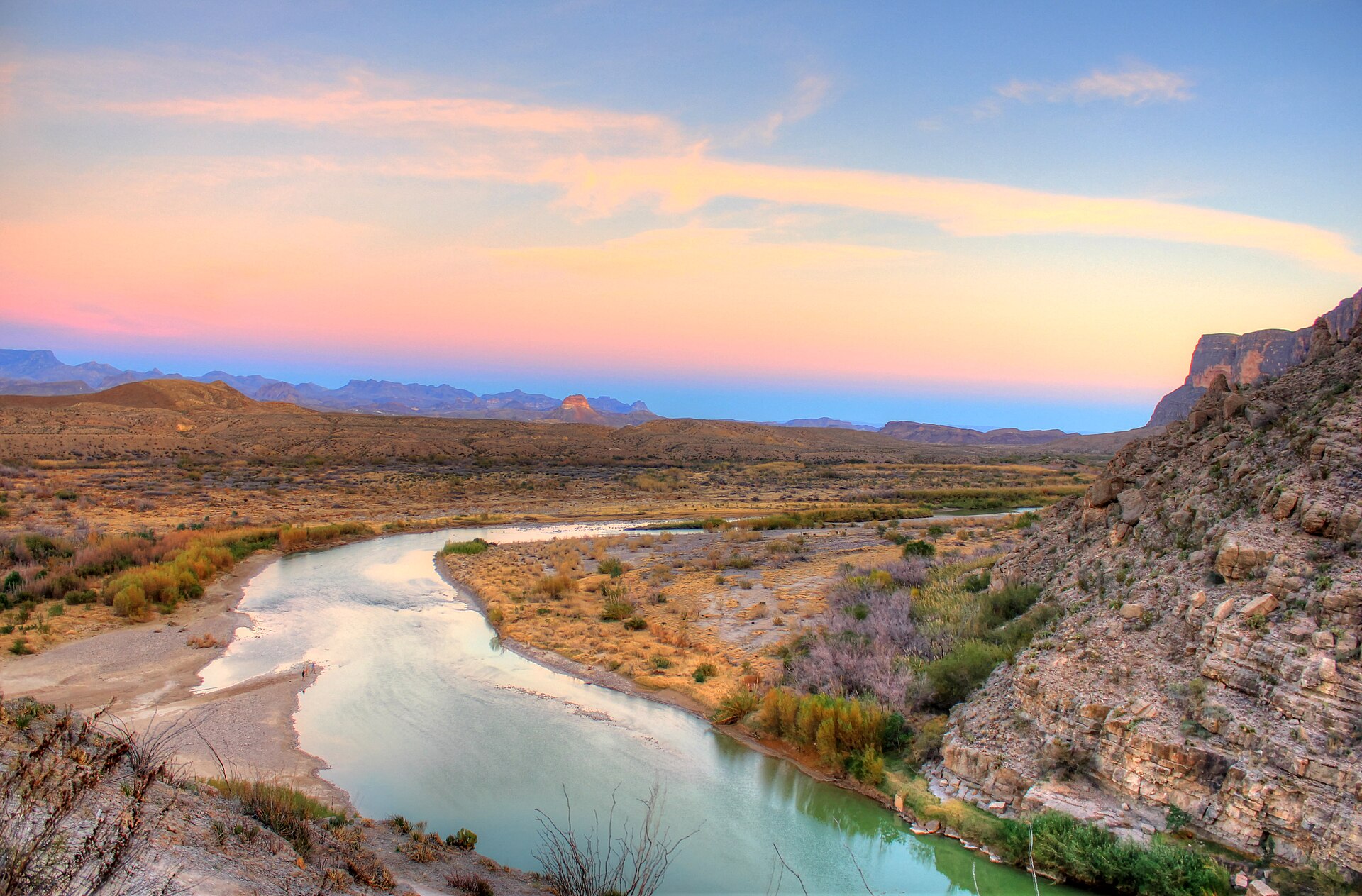
When most of Texas finally cools off, Big Bend National Park comes into its prime. Winter swaps the brutal desert heat for mild, sunny days that are just right for hiking, while the Chisos Mountains and the Rio Grande canyons look their best in low winter light.
It’s a long way from anywhere, so a little planning goes a long way. Here’s what to know before you point the truck south.
Why winter is Big Bend’s sweet spot
Big Bend covers about 800,000 acres of Chihuahuan Desert, mountains and river canyons in Brewster County, and for much of the year the heat is the main thing to plan around. The park advises carrying at least a gallon of water per person per day, and in summer even that can feel thin. Late fall through early spring is a different story, with daytime temperatures that make longer hikes realistic.
Winter has a couple of catches. Cold fronts can blow through quickly, and the Chisos Basin sits at about 5,400 feet, so nights up high can drop near or below freezing and occasionally bring ice. Pack layers, a warm jacket and a beanie even if the forecast in the lowlands looks balmy.
Winter is also popular. The park treats January 1 through April 15 as its busy season, when visitors are limited to 14 total nights in the park, and holiday weeks and spring break draw the biggest crowds. If you can go midweek or outside the holidays, you’ll have an easier time with campsites and trailhead parking.
Getting there
Big Bend is remote, even by Texas standards. Panther Junction, the park headquarters, is roughly 100 miles south of Alpine. Plan on about 7 to 8 hours of driving from San Antonio and around 5 hours from El Paso. Fill your tank and grab groceries in Alpine, Marathon or the Terlingua area before you head in, since services inside the park are limited. We covered Alpine, the gateway to Big Bend, if you’d like a stopover town.
The park’s entrance fee is $30 per private vehicle, good for seven days, or $55 for a Big Bend annual pass. The park takes credit and debit cards only.
Where to stay in and near the park
The Chisos Mountains Lodge in the Chisos Basin is the only lodging inside the park and is open year-round, with rooms and cottages. Earlier plans to close the Chisos Basin for a lodge rebuild were called off in spring 2026, and the Basin remains open. The lodge restaurant has been closed, with a food truck serving the area instead, so check what’s operating before you count on a hot meal.
For campers, the Chisos Basin and Rio Grande Village campgrounds both require reservations, and Chisos Basin sites can be booked up to six months ahead. Cottonwood Campground, on the west side near Castolon, is seasonal and typically opens for the cooler months. There’s also a small full-hookup RV park at Rio Grande Village run by the park concessioner.
Outside the park, Terlingua and Study Butte sit close to the west entrance, and Alpine and Marathon offer more choices if you don’t mind the drive. The park points visitors to VisitBigBend.com for area lodging. Whatever you choose, book early for winter weekends and holidays.
Trails to try this winter
Big Bend has hikes for every ability. Here are six favorites, with round-trip distances from the park:
- Lost Mine Trail (4.8 miles, about 1,100 feet of climbing): one of the best views in the park from a ridge high in the Chisos. The trailhead lot is small and fills early, and parking along the road isn’t allowed.
- Window Trail (5.6 miles from the Basin trailhead): drops down to the famous Window pour-off, a notch in the mountains framing the desert below. Remember the climb back up comes at the end.
- Santa Elena Canyon (about 1.6 miles): a short walk into a canyon with 1,500-foot cliffs, one side in Texas and the other in Mexico. You may have to wade Terlingua Creek at the start, so ask a ranger about conditions.
- Hot Springs (about half a mile): an easy walk past old resort ruins to a historic hot spring on the riverbank. It can be cut off when the river is high.
- Boquillas Canyon (1.4 miles): an easy path on the east side to the mouth of a deep river canyon.
- Emory Peak (about 10 miles, roughly 2,470 feet of climbing): the park’s high point, with a rocky scramble at the top. Strenuous, but winter is the best time to try it.
For something different, Balanced Rock in the Grapevine Hills is a 2.2-mile round trip to a boulder perched between two others. The trailhead is down a dirt road the park recommends for high-clearance vehicles.
A few more winter tips
Check the park’s current conditions page before and during your trip. Storms and flash floods can close roads, including stretches on the west side of the park, and some backcountry roads require true four-wheel drive.
If you’d like to cross into the village of Boquillas, Mexico, the Boquillas Port of Entry operates on a limited schedule that changes by season. Bring your passport and check the current days before you go.
Finally, Big Bend sits under some of the darkest skies in the country. On a clear winter night, step away from your headlights for a few minutes and look up.
Good to Know
- Where: Brewster County; Panther Junction is about 100 miles south of Alpine, roughly 7 to 8 hours from San Antonio.
- Entrance fee: $30 per private vehicle (seven days) or $55 Big Bend annual pass; cards only.
- Busy season: January 1 to April 15, with a 14-night limit; holidays and spring break are busiest.
- Lodging: Chisos Mountains Lodge is the only lodging in the park; book at chisosmountainslodge.com.
- Camping: Chisos Basin and Rio Grande Village require reservations; Cottonwood is seasonal.
- Pack: At least a gallon of water per person per day, layers for cold nights and a passport if you plan to visit Boquillas.
Hours, dates and prices can change. Check the official park website before you head out.
Big Bend asks a lot of a traveler: long drives, careful planning and plenty of water. Come in winter, though, and the payoff is huge, with cool mornings on the trail, quiet canyons and some of the biggest skies you’ll ever see in Texas.